









Lo que pasó ese día

Contar hechos pasados, distinguiendo acciones largas y cortas en el pasado

11 palabras1 puntos de gramática1 diálogos~15 min

Vocabulario11 palabras

happen: pasar, ocurrir
happen/ˈhæpən/verbo
  • pasar, ocurrir · to take place

Ejemplos

What happened last night?

¿Qué pasó anoche?

notice: darse cuenta, notar
notice/ˈnoʊtɪs/verbo
  • 1.darse cuenta, notar · to see or become aware of something
  • 2.aviso, letrero · a sign that tells people something

Ejemplos

Did you notice the new sign?

¿Notaste el letrero nuevo?

There is a notice on the door.

Hay un aviso en la puerta.

realize: darse cuenta de
realize/ˈriəlaɪz/verbo
  • darse cuenta de · to understand something suddenly

Ejemplos

I did not realize it was so late.

No me di cuenta de que era tan tarde.

seem: parecer
seem/siːm/verbo
  • parecer · to give the impression of being

Ejemplos

She seems very happy today.

Hoy parece muy feliz.

hold: sostener, sujetar
hold/hoʊld/verbo
  • sostener, sujetar · to have something in your hand

Ejemplos

Hold this bag for a moment.

Sostén esta bolsa un momento.

catch: atrapar, agarrar
catch/kætʃ/verbo
  • 1.atrapar, agarrar · to take hold of something moving
  • 2.alcanzar, tomar (un autobús, un tren) · to get on a bus or a train in time

Ejemplos

Catch the ball!

¡Atrapa la pelota!

I must catch the last bus.

Tengo que alcanzar el último autobús.

throw: lanzar, tirar
throw/θroʊ/verbo
  • lanzar, tirar · to send something through the air with your hand

Ejemplos

Do not throw rubbish here.

No tires basura aquí.

cut: cortar
cut/kʌt/verbo
  • cortar · to open or divide something with a knife

Ejemplos

Cut the bread into six pieces.

Corta el pan en seis pedazos.

pull: jalar, tirar de
pull/pʊl/verbo
  • jalar, tirar de · to move something towards you

Ejemplos

Pull this handle to open.

Jala esta manija para abrir.

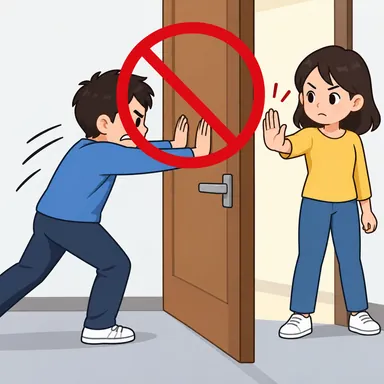
push: empujar
push/pʊʃ/verbo
  • empujar · to move something away from you

Ejemplos

Push the door, do not pull it.

Empuja la puerta, no la jales.

strange: extraño/a, raro/a
strange/streɪndʒ/adjetivo
  • extraño/a, raro/a · unusual and hard to explain

Ejemplos

That is a strange story.

Es una historia extraña.

Gramática

Pasado simple: verbos irregulares frecuentes

S + V2

En A1 aprendiste cómo se forma el pasado; en A2 hay que ampliar el repertorio de verbos irregulares. Los más usados: bring–brought, buy–bought, catch–caught, teach–taught, think–thought, feel–felt, keep–kept, leave–left, lose–lost, meet–met, pay–paid, send–sent, sit–sat, win–won. Errores comunes: no se añade -ed a los verbos irregulares: buyed ✗, bought ✓. Y después de did el verbo vuelve al infinitivo: didn't bought ✗, didn't buy ✓.

She brought her own lunch.

Ella trajo su propio almuerzo.

I thought about it all night.

Pensé en eso toda la noche.

We paid at the counter.

Pagamos en el mostrador.

He won the game.

Él ganó el juego.

Diálogos

Contar el incidente

Contarle a un amigo lo que pasó esta mañana

Na
Nam

What happened this morning?

¿Qué pasó esta mañana?

Th
Thu

A man threw a bag and I caught it.

Un hombre lanzó una bolsa y yo la atrapé.

Na
Nam

Did you notice who he was?

¿Te fijaste quién era?

Th
Thu

No. He pushed the door and ran.

No. Empujó la puerta y salió corriendo.

Na
Nam

That seems strange.

Qué extraño.

Th
Thu

I held the bag and realized it was my bag. He cut the strap and pulled it off.

Sostuve la bolsa y me di cuenta de que era mía. Cortó la correa y me la arrancó.