









Chuyện xảy ra hôm đó

Kể lại việc đã xảy ra, phân biệt việc dài và việc ngắn trong quá khứ

11 words1 grammar points1 dialogues~15 min

Vocabulary11 words

happen: to take place
happen/ˈhæpən/Verb
  • to take place

Examples

What happened last night?

Tối qua có chuyện gì vậy?

notice: to see or become aware of something
notice/ˈnoʊtɪs/Verb
  • 1.to see or become aware of something
  • 2.a sign that tells people something

Examples

Did you notice the new sign?

Bạn có để ý cái biển mới không?

There is a notice on the door.

Trên cửa có một tờ thông báo.

realize: to understand something suddenly
realize/ˈriəlaɪz/Verb
  • to understand something suddenly

Examples

I did not realize it was so late.

Tôi không nhận ra là đã muộn thế.

seem: to give the impression of being
seem/siːm/Verb
  • to give the impression of being

Examples

She seems very happy today.

Hôm nay cô ấy có vẻ rất vui.

hold: to have something in your hand
hold/hoʊld/Verb
  • to have something in your hand

Examples

Hold this bag for a moment.

Cầm giúp cái túi một lát.

catch: to take hold of something moving
catch/kætʃ/Verb
  • 1.to take hold of something moving
  • 2.to get on a bus or a train in time

Examples

Catch the ball!

Bắt bóng đi!

I must catch the last bus.

Tôi phải kịp chuyến xe cuối.

throw: to send something through the air with your hand
throw/θroʊ/Verb
  • to send something through the air with your hand

Examples

Do not throw rubbish here.

Đừng vứt rác ở đây.

cut: to open or divide something with a knife
cut/kʌt/Verb
  • to open or divide something with a knife

Examples

Cut the bread into six pieces.

Cắt bánh mì thành sáu miếng.

pull: to move something towards you
pull/pʊl/Verb
  • to move something towards you

Examples

Pull this handle to open.

Kéo tay nắm này để mở.

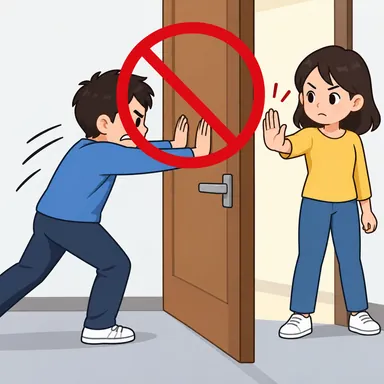
push: to move something away from you
push/pʊʃ/Verb
  • to move something away from you

Examples

Push the door, do not pull it.

Đẩy cửa chứ đừng kéo.

strange: unusual and hard to explain
strange/streɪndʒ/Adjective
  • unusual and hard to explain

Examples

That is a strange story.

Đó là câu chuyện lạ.

Grammar

Quá khứ đơn — động từ bất quy tắc thường gặp

S + V2

Bậc A1 đã học cách dựng; ở A2 phải mở rộng vốn động từ bất quy tắc. Nhóm hay dùng: bring–brought, buy–bought, catch–caught, teach–taught, think–thought, feel–felt, keep–kept, leave–left, lose–lost, meet–met, pay–paid, send–sent, sit–sat, win–won. Bẫy thường gặp: Đừng thêm -ed vào động từ bất quy tắc: buyed ✗, bought ✓. Và sau did thì trở về nguyên thể: didn't bought ✗, didn't buy ✓.

She brought her own lunch.

Cô ấy tự mang bữa trưa.

I thought about it all night.

Tôi nghĩ về nó cả đêm.

We paid at the counter.

Chúng tôi trả tiền ở quầy.

He won the game.

Anh ấy thắng trò đó.

View details & practice

Dialogues

Kể lại vụ va chạm

Kể cho bạn nghe chuyện sáng nay

Na
Nam

What happened this morning?

Sáng nay có chuyện gì?

Th
Thu

A man threw a bag and I caught it.

Một người ném cái túi và tôi bắt được.

Na
Nam

Did you notice who he was?

Bạn có để ý ông ta là ai không?

Th
Thu

No. He pushed the door and ran.

Không. Ông ta đẩy cửa rồi chạy.

Na
Nam

That seems strange.

Nghe lạ thật.

Th
Thu

I held the bag and realized it was my bag. He cut the strap and pulled it off.

Tớ cầm cái túi lên mới nhận ra đó là túi của tớ. Anh ta cắt quai rồi giật đi.